Well Ageing AI
How can well ageing processes be recognized earlier and managed proactively?
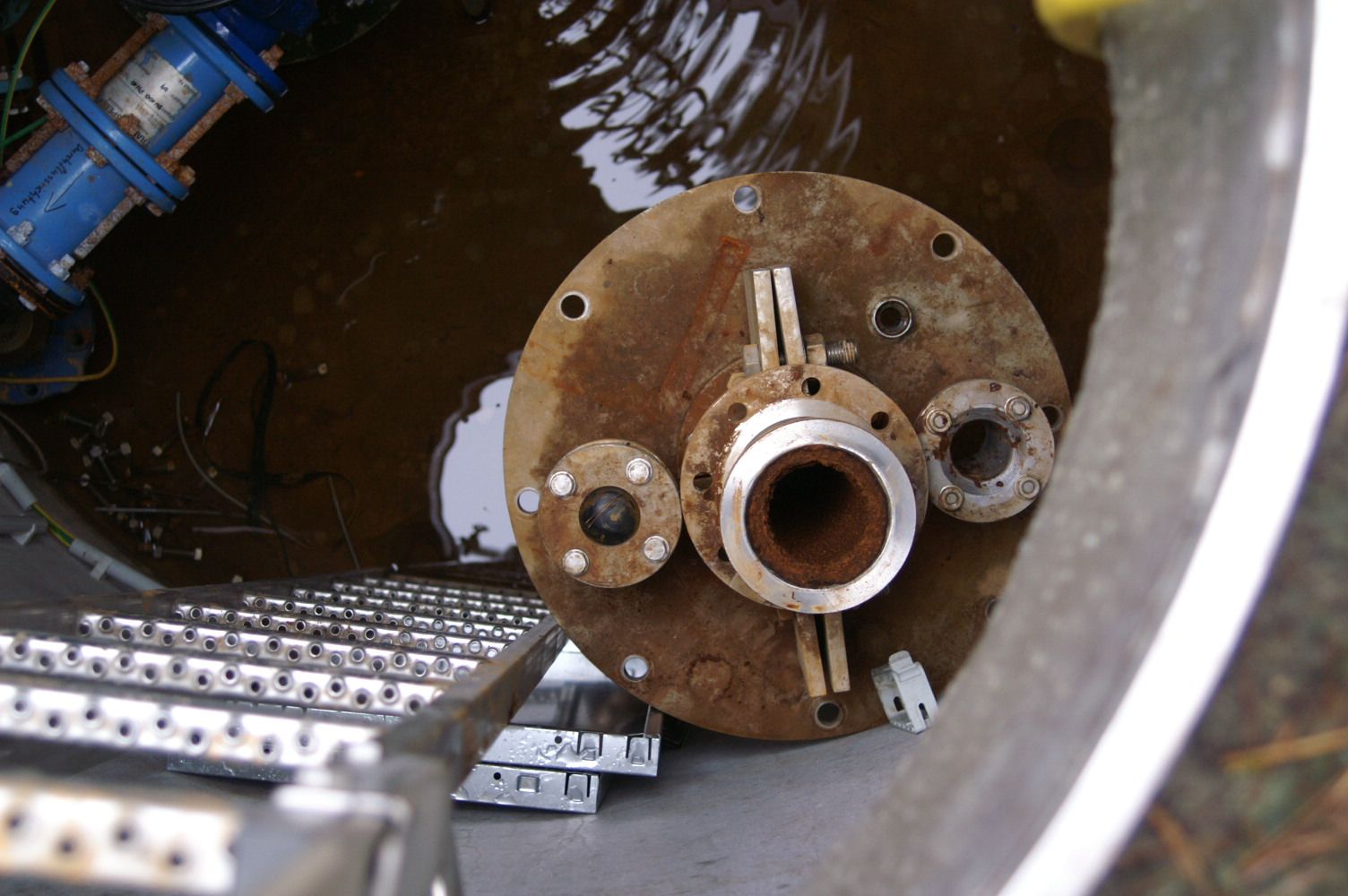
The project WELL-KI focuses on how ageing processes of drinking water wells can be quantifiably measured and evaluated. This question is of crucial importance for Berlin’s drinking water supply: wells lose their efficiency (specific capacity) over time due to sedimentation of iron ochre, among other causes. At the same time, population growth, the effects of climate change and site-specific operational constraints (including environmental protection requirements and pollution) are placing increasing demands on the infrastructures needed to ensure the reliable supply of drinking water.
KWB, together with the Berlin Waterworks (Berliner Wasserbetriebe, BWB), will test traditional and AI-based methods to evaluate the condition and capacity of wells more precisely and to support decisions about well regeneration, renovation and construction.
WELL-KI builds on various other projects at KWB from the past 15 years. Until now, the capacity of individuals wells could largely only be assessed every few years, typically in the context of renovation. Thanks to new measuring technology, data on well aging can now be collected much more frequently and, in some cases, nearly in real time. This also makes it easier to recognize the effects of neighbouring wells and to take them into account during the evaluation.
How to reliably determine the specific capacity of a well under actual operating conditions and in real time: that is the question.
To answer it, KWB will analyse long-term operational data on water levels, flow rates, pump running time and construction. This will be supplemented by analytical methods, datasets from physical models as well as machine learning techniques. The aim is to better describe and, in the future, predict the relationships between well operation, the influence of neighboring wells, and aging processes. The results will be incorporated into a prototypical digital tool that can be used to dynamically determine the specific capacity of wells.
WELL-KI will also analyse and compile the current state of research on well aging and potential countermeasures. A workshop series intended for water suppliers and experts in the field of well ageing will bring together scientific findings and practical operational experience. This will establish solid foundations for sustainable, data-driven, and proactive well management.
Project lead: Michael Rustler
Researchers: Christoph Sprenger, Nasrin Haacke